How Much Time Magic Kingdom® Park Actually Takes (and Why It Sneaks Up on You)

Magic Kingdom® Park has a very specific way of humbling even the most organized traveler.
You show up at 8:00 AM with a solid plan, your app ready, and Lightning Lane booked like you know what you’re doing.
Then suddenly it’s 9:00 PM, your feet are done, and you’ve ridden way less than you expected.
That experience happens to almost everyone—and it’s not because you did anything wrong.
Magic Kingdom® Park covers over 100 acres, and even moving efficiently between lands can take more time and energy than most visitors expect.
This park is designed to quietly eat your time in ways you don’t notice until it’s gone.
The good news is you can plan around it once you understand how it actually works.
Keep reading as I show you how to make Magic Kingdom Park feel doable instead of overwhelming.
The Invisible Time Costs That Hit Before You Ride Anything
Before you even step on your first ride, you’ve already spent more time than you think. These hidden delays are what quietly throw off your entire day.
The Transportation and Ticket Center Gap
This is the first place your day quietly gets derailed—and most people don’t even realize it’s happening.
Magic Kingdom Park doesn’t let you just park and walk in. You park at the Transportation and Ticket Center (TTC), and from there, you still need to take either the ferry or the monorail to reach the entrance.
That sounds simple until you factor in real-world timing: waiting for transport, loading, the ride itself, unloading, walking to security, then finally getting through the gates.
All of that stacks into 45–60 minutes on a typical day. On slower days this can move faster, but during peak seasons or busy mornings, it can stretch well beyond an hour.
What makes this tricky is perception. You feel like you arrived early because you got to the parking lot early, but the park doesn’t care when you parked. It cares when you tap in.
That gap is where people lose their rope drop advantage without realizing it. This is where most visitors lose 25–40% of their most valuable morning window.
The practical fix is to reverse your thinking. Don’t plan when to arrive at the parking, plan when you want to be at the gates, then work backward at least an hour.
If the park opens at 9:00 AM, your goal isn’t “get there at 9:00”. It’s “be inside by 8:30.”
If you’re staying on Disney property, this is where the value shows up immediately. Resort buses drop you near the entrance, skipping the entire TTC process.
Plus, if you’re staying at a Walt Disney World® Resort hotel, you may also have access to Early Entry, which allows you to enter Magic Kingdom® Park about 30 minutes before official opening.
The 2026 Construction Effect (Why the Park Feels Slower Than It Should)
This is the part that makes even experienced visitors pause and go, “Wait, why is everything taking longer?”
Right now, Magic Kingdom Park isn’t flowing at full capacity. With major projects underway and ride availability shifting, the park is subtly (but noticeably) less efficient.
Here’s what that actually means in practice:
- Walkways feel tighter and more crowded than expected
- Routes that used to be direct now take longer
- You spend more time navigating than you planned
But the bigger impact isn’t walking—it’s distribution.
When a major attraction is down or newly reopened, guests don’t disappear. They redistribute.
That’s why rides that used to feel like easy wins—Pirates of the Caribbean®, Haunted Mansion®, even some Fantasyland rides—start posting wait times that feel out of proportion.
Pirates of the Caribbean® and Haunted Mansion® now regularly hit 45–60 minute waits because of this redistribution.
So if your plan looks like:
“I’ll just do the big rides early and fill in the rest later.”
That “fill in the rest later” part is where things break down.
The smarter move is to treat secondary rides with more urgency than you normally would and to avoid crisscrossing the park chasing slightly lower wait times.
Every unnecessary backtrack costs more right now than it used to.
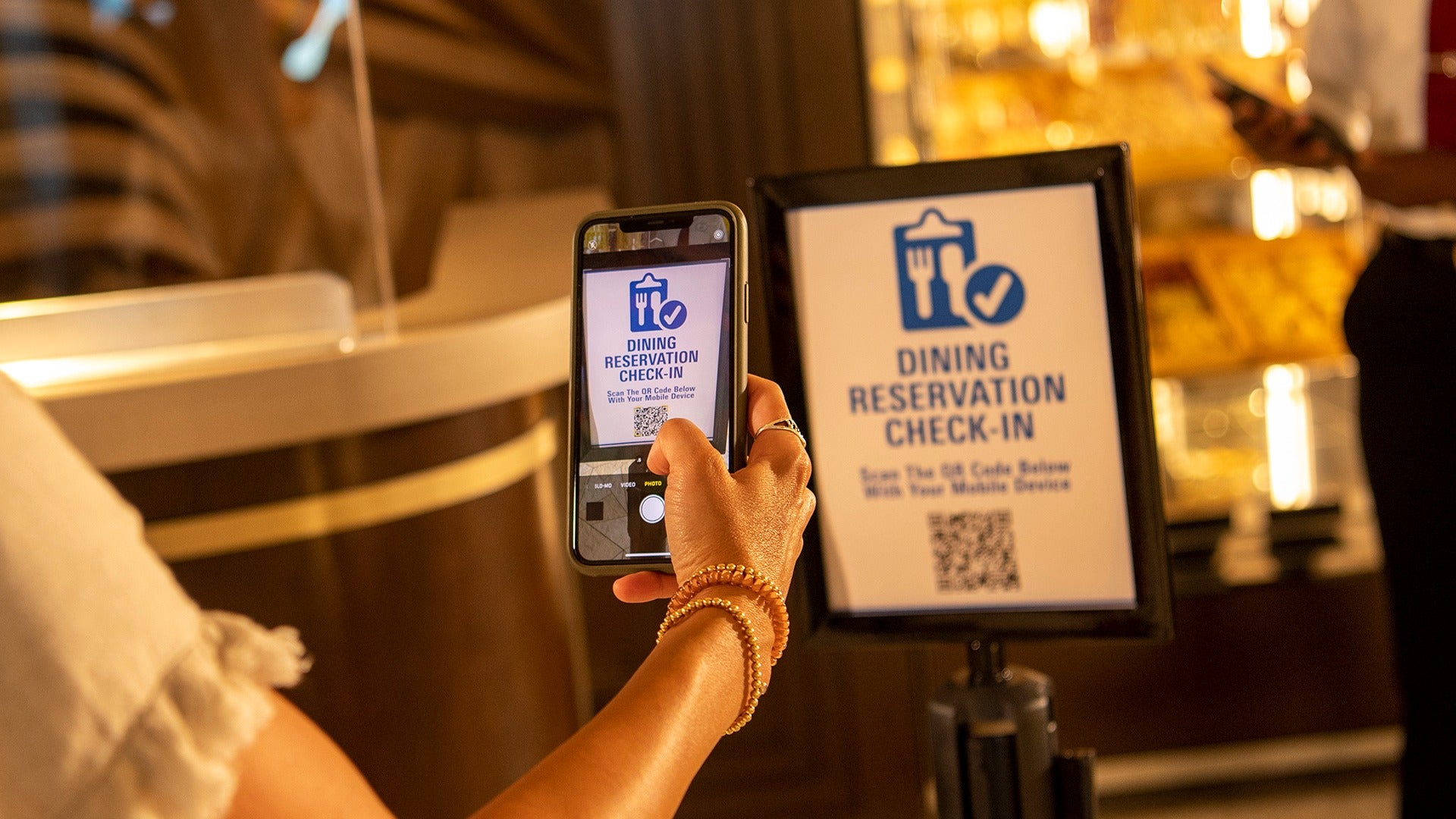
The Mobile Order Timing Problem (It’s Not About Skipping the Line)
Mobile order solves one problem—standing in line—but it doesn’t solve timing.
The assumption most people make is: “We’ll order when we’re hungry.”
The reality is: By the time you’re hungry, everyone else is too.
So you open the app at 12:15 PM and realize the next pickup window isn’t until 1:45 PM.
Now you’re stuck in that awkward gap where energy drops, patience drops, and suddenly everything feels harder than it did an hour ago.
This is one of those small decisions that has a big ripple effect.
The fix is to think ahead by just enough: Place your order around 10:30–11:00 AM for a late-morning pickup.
It feels early in the moment, but it lines up perfectly with when your energy will actually dip.
Instead of scrambling for food when everyone’s already tired, you’re sitting down right when you need it most.
That’s the difference between staying ahead of the day and reacting to it.
What Actually Eats Your Day (It’s Not Just Rides)
Here’s the part that surprises people: rides aren’t what make Magic Kingdom Park feel long.
It’s everything wrapped around them.
You’re not just moving from ride to ride—you’re constantly making micro-decisions:
“Should we stop for this?”
“Should we grab a snack?”
“Should we take a picture here?”
And none of those feel like time sinks individually. Each one adds 5–10 minutes. And across a full day, that quietly becomes 1–2 hours gone.
Let’s talk about the big ones.
Character Meets (The Time Commitment Nobody Warns You About)
Meeting a character sounds quick. It feels like something you can “fit in.”
You can’t.
From the moment you get in line to the moment you’re done with photos, you’re looking at anywhere from 45 to 90 minutes.
And for families, this isn’t optional—it’s often one of the most meaningful parts of the trip.
That’s why this needs to be treated like a major attraction, not a side activity.
If meeting characters matters to your group, build it into your day intentionally. If it doesn’t, skip it without guilt. The mistake is trying to squeeze it in casually—it doesn’t behave like a quick stop.
The Parade (Where Momentum Disappears)
The Festival of Fantasy Parade® is genuinely worth seeing. It’s colorful, high-energy, and one of the most “classic Disney” moments in the park.
But it comes at a cost.
To get a good viewing spot, you’re usually locking in 30–60 minutes before it starts. And that window—mid-afternoon—is one of your most valuable ride periods if you’re trying to maximize attractions.
So the real decision isn’t “Do I want to see the parade?”
It’s “What am I willing to trade for it?”
If you only have one day and rides are the priority, skipping the parade can free up a huge chunk of productive time. If you have more flexibility, it becomes an easy yes.
Fireworks (The Best Part of the Day—With a Catch)
Happily Ever After® is the moment everything builds toward. It’s emotional, it’s big, and it’s one of the few times the entire park collectively slows down.
But again, it’s not just the show.
To experience it properly, you’re:
- Claiming a spot 20–30 minutes early
- Standing in a packed crowd
- Then exiting with everyone else at the same time
That exit alone can take close to an hour, depending on where you’re staying.
None of this makes it not worth it—it absolutely is. But it explains why your “last ride” window disappears faster than expected.
How Much Time You Actually Need (No Wishful Thinking)
This is where expectations matter. How much you can realistically do depends on how you choose to experience the park.
Solo or Ride-Focused Adults
If your goal is efficiency—rides first, everything else second—you can absolutely make Magic Kingdom Park work in one long day.
But it requires discipline.
You’re rope dropping, using Lightning Lane strategically, and moving with purpose. You’re not lingering, not doubling back, and not adding things impulsively just because they look fun in the moment.
At Walt Disney World® Resort, Lightning Lane includes both Multi Pass selections and Individual Lightning Lane purchases.
Multi Pass lets you reserve return times for several attractions throughout the day, while Individual Lightning Lane is used for a small number of the most in-demand rides, like TRON Lightcycle / Run™, and requires a separate purchase.
In that version of the day, you can cover a surprising amount.
With strong execution, you can realistically hit 10–15 major attractions.
The tradeoff is that you’re experiencing Magic Kingdom Park like a well-run mission, not a slow, immersive experience. It works—but it feels different.
Couples
Couples naturally slow the pace down—and that’s a good thing.
You’re stopping for photos, sitting down for meals, and taking in details instead of rushing past them. The park becomes less about “what’s next” and more about “this is nice, let’s stay here a minute.”
But that shift means one day starts to feel tight.
You can still do it, but by the end of the night, there’s usually a moment of “we didn’t get to everything.” That’s normal. It just means you experienced it fully instead of efficiently.
Families with Kids
This is where expectations need to be realistic.
Kids change the pacing completely—not in a bad way, but in a very real one.
They:
- Want to repeat rides
- Move more slowly between attractions
- Hit a wall around mid-afternoon
Trying to push through that wall is where the day goes off track.
The better structure is to split the experience:
One full day for the big highlights, and a second, shorter visit to pick up what you missed.
This isn’t about doing more—it’s about making the experience feel manageable instead of overwhelming.
First-Timers
Everything takes longer when it’s your first time, and trust me, it should!
You’re noticing details, taking photos, pausing in places you didn’t expect to care about. The park is designed for that.
But it means your timeline stretches.
One day will give you a strong overview. Two days give you the version where you actually feel like you experienced it instead of just moving through it.
A Realistic Day Structure (What Your Day Actually Looks Like)
A Magic Kingdom Park day doesn’t fall apart because of one big mistake—it’s a series of small timing misses that stack up fast.
The goal here isn’t to do everything; it’s to move with the natural rhythm of the park instead of fighting it.
Think of the day in blocks: early advantage, midday survival, and evening payoff.
If you follow this flow, you’ll feel in control instead of constantly catching up.
- 8:00–9:00 AM — Transportation + Rope Drop: Arrive at the Transportation and Ticket Center by around 7:15 AM, or be at your resort bus stop 45 minutes before opening. This is where you get ahead of the day—miss this window, and you’ll spend the rest of the morning trying to recover.
- 9:00 AM–12:00 PM — Headliners First, No Detours: Go straight to your biggest rides like TRON Lightcycle / Run™, Seven Dwarfs Mine Train®, and Space Mountain® using rope drop and Lightning Lane. These first three hours can save you up to 2–3 hours of waiting later, which is why this window matters more than anything else.
- 12:00–1:00 PM — Early Lunch Reset: Mobile order your food by 10:30–11:00 AM so you’re not stuck waiting when hunger hits. Sitting down in air conditioning at this point isn’t optional—it’s what keeps the rest of your day from spiraling.
- 1:00–4:00 PM — Slow Down and Stay Strategic: This is when crowds and heat peak, so shift to Lightning Lane rides and nearby attractions instead of running across the park. You’re not chasing big wins here—you’re maintaining momentum without burning out.
- 4:00–6:00 PM — Built-In Recovery That Still Feels Productive: Use this time for indoor shows, Tomorrowland Transit Authority PeopleMover®, or anything that gets you off your feet without wasting time. This is where the trip shifts, and pacing yourself here is what makes the night enjoyable instead of exhausting.
- 6:00–10:00 PM — Dinner, Fireworks, and the Payoff: Eat, then grab your fireworks spot 20–30 minutes early and commit to it. The evening atmosphere is what makes the long day worth it, but only if you still have the energy to enjoy it.
The Decisions That Actually Save Your Day
Most people don’t run out of time because of lines—they run out of time because of poor timing decisions.
There are a lot of tips out there. Most of them don’t matter as much as these.
Rope drop is the biggest advantage you have, and it’s free. Showing up early doesn’t just save you time—it sets the tone for the entire day.
Lightning Lane works best when it’s part of your plan, not something you rely on later. The earlier you use it effectively, the more breathing room you create for the rest of your day.
And this one is less obvious but just as important: pacing matters more than productivity.
The people who enjoy Magic Kingdom Park the most aren’t the ones who did the most—they’re the ones who didn’t hit a wall halfway through.
Make Magic Kingdom Park Work for You, Not the Other Way Around
Magic Kingdom Park doesn’t feel overwhelming because it’s too big. It feels overwhelming because the time slips away in ways most people don’t plan for.
When you understand where those hours go, everything changes. Your day feels more controlled, your decisions feel easier, and the experience actually starts to feel like a vacation instead of a challenge.
Planning your trip through Tripster helps take pressure off the big decisions by bundling Orlando attractions, shows, and hotels into money-saving vacation packages, so you’re not figuring things out while you’re already in the middle of the chaos.
Now go plan it right, pace it smart, and have the kind of Magic Kingdom Park day people wish they had!
Magic Kingdom Park FAQs
How early should I arrive at Magic Kingdom Park to avoid crowds?
You should aim to be inside the park 30 minutes before opening, not just arriving at parking. That usually means getting to transportation 45–60 minutes early.
What is the biggest time-wasting mistake at Magic Kingdom Park?
Arriving “on time” instead of early is the most common mistake. Missing rope drop forces you to spend the rest of the day catching up.
How many rides can you realistically do in one day at Magic Kingdom Park?
Most visitors can do 8–12 attractions with average planning. With strong strategy and early arrival, that can increase to around 12–15.
Is one day enough for Magic Kingdom Park?
One day is enough to hit the highlights if you plan well. Two days allows a slower pace and a more complete experience.
What part of the day is the most crowded at Magic Kingdom Park?
The busiest time is typically from 12:00 PM to 4:00 PM. This is when wait times peak and movement around the park slows down.
Should I watch the parade or focus on rides?
It depends on your priorities—parades cost 30–60 minutes of prime ride time. If rides matter more, skipping it can significantly improve your day efficiency.
When should I eat to avoid long waits at Magic Kingdom Park?
Order food before you’re hungry, ideally around 10:30–11:00 AM. This avoids peak lunch crowds and long mobile order delays.
Is Lightning Lane necessary at Magic Kingdom Park?
It’s not always required, but it becomes valuable when wait times exceed 60 minutes. Using it early in the day creates more flexibility later
What’s the best way to avoid burnout during the day?
Pacing is more important than doing everything. Taking breaks and slowing down midday helps you enjoy the evening instead of feeling exhausted.
