Typhoon Lagoon vs Volcano Bay: Which Water Park Is Better?
You know that moment in your Orlando trip planning where everything is locked in—parks, dining, outfits—and then one free day stares back at you like, “so… what now?”
That’s where the Volcano Bay vs Typhoon Lagoon debate sneaks in and suddenly feels way more important than it should.
Volcano Bay is part of Universal Orlando Resort, which makes it especially easy if you’re already staying nearby, and some hotels can even walk there.
Disney’s Typhoon Lagoon Water Park® is on Walt Disney World® Resort property, which makes it easier to reach if you’re staying at a Disney hotel and using Disney transportation.
Both are top-tier water parks, but they deliver completely different energy. One feels like a sleek, tech-driven island escape, the other like a laid-back tropical storybook.
I’d think of it as choosing between “relax and float all day” and “okay, wait, let’s do that again but faster.”
The tricky part is that both sound right until you actually picture your group at 2pm in the heat.
If you’ve been stuck in the Typhoon Lagoon vs Volcano Bay bay spiral, this is where it finally makes sense, so read on!
Volcano Bay: The “This Is Actually Fun” Water Park Day
This is the water park that somehow makes logistics feel… manageable, which already feels suspicious.
Located at 6000 Universal Blvd, Orlando, FL, you’ll typically park at Universal’s main garage and take the complimentary shuttle, or use direct hotel buses if staying on-site.
Volcano Bay works especially well for older kids, teens, and adults who want more slides, more movement, and more of that “what are we doing next?” energy.
It can still work for younger kids, but it definitely leans more active than relaxing.
One important planning note: If you’re visiting Universal Orlando after October 26, 2026, Volcano Bay won’t be an option.
The park is closed for a major five-month refurbishment from October 26, 2026, through March 24, 2027.
If your trip falls in that window, plan your water park day elsewhere or adjust your travel dates accordingly.
Krakatau and the Slides That Look Slightly Unreal
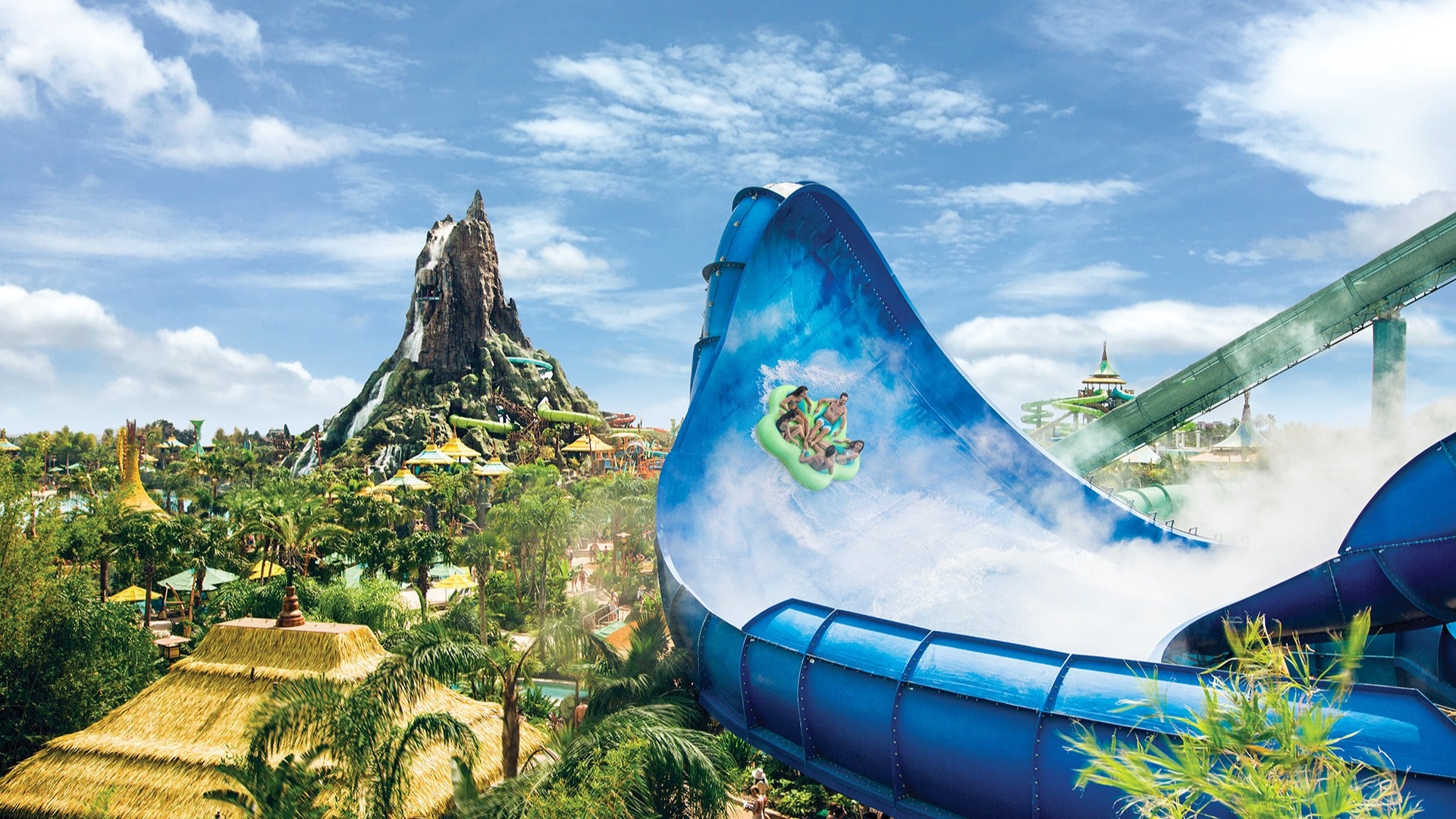
At the center of Universal Volcano Bay is Krakatau, a massive volcano that looks like it belongs in a movie set, not a water park.
Water cascades down the sides, mist catches the sunlight, and every few minutes, you hear distant screams echoing from slides hidden inside.
This is where rides like the Ko’okiri Body Plunge live—the near-vertical drop that feels like stepping off the edge of your own confidence. I’d probably hesitate for a second… and then immediately get back in line.
The slides here are fast, polished, and designed to feel like an experience, not just a ride.
This is also where Volcano Bay separates itself most clearly from Typhoon Lagoon, because it feels more like a water park built around thrills than one built around floating and resetting.
You don’t just climb stairs—you anticipate what’s coming next. And yes, everything looks better than it needs to, which somehow makes it more fun.
Wave Village and the Not-So-Chill Wave Pools
The wave pools at Volcano Bay don’t do subtle. One side is calmer, but the main pool builds into deep, rolling waves that push you back with enough force to make you rethink your stance.
It’s less “floating peacefully” and more “brace yourself, here we go.”
If your group likes action, this area is a win. If you’re traveling with smaller kids or anyone who just wants to ease into the day, this may not be the part of the park where you linger longest.
I’d recommend grabbing a spot early because this area fills up fast once people realize how good it is.
Seating near the main areas goes quickly, especially after 11 AM, so claiming chairs earlier in the day makes everything easier.
There’s sand, there’s space, and somehow it still feels organized. Kids jump into waves like it’s a game, adults pretend they’re in control—it’s chaos, but fun chaos.
It’s the kind of place where time disappears quickly. You came for a quick dip, now it’s been an hour.
Disney’s Typhoon Lagoon Water Park: The “We’re Actually Relaxing” Day
This is the kind of place where you accidentally slow down and don’t hate it.
Located at 1145 E Buena Vista Dr, Orlando, FL, Disney’s Typhoon Lagoon Water Park is accessible via Disney bus (with a transfer at Disney Springs® Area), rideshare, or by driving and parking on-site.
Typhoon Lagoon usually works better for toddlers, younger kids, and mixed-age groups because the day feels less demanding overall.
It’s easier to settle into one area, easier to supervise from a chair, and easier to let the day unfold without constantly moving.
If Volcano Bay feels like a “do more” day, Typhoon Lagoon feels like the water park version of exhaling.
One important planning note: Typhoon Lagoon closes annually for seasonal refurbishment.
In 2026, it’s closed until May 12, so if your trip falls outside the summer and early fall window, always confirm the park is open before you plan your day around it.
Check the official Walt Disney World website for current operating dates before you book.
The Surf Pool That Steals the Show
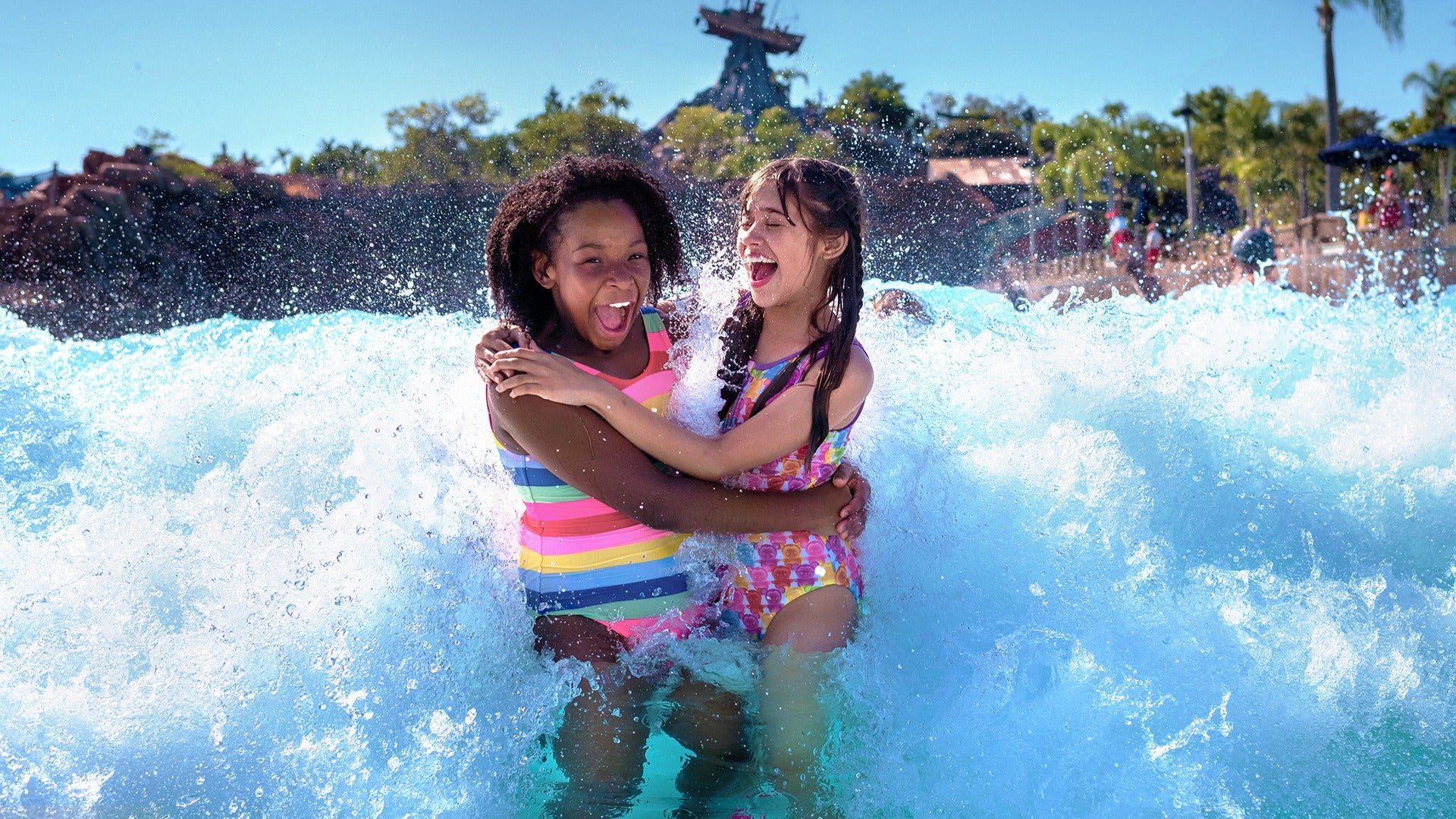
At Disney’s Typhoon Lagoon Water Park, the wave pool isn’t just a feature—it’s the main event.
Every few minutes, a massive wave rolls across the lagoon like it has a personal agenda.
The sound hits first, then the swell, and suddenly everyone’s either jumping into it or bracing for impact. I’d absolutely carve out time just to stay here because it’s weirdly addictive.
There’s a sandy beach, plenty of space, and it feels more like a tropical shoreline than a park.
It still gets busy, especially around the main lagoon and beach seating, so getting there earlier in the day makes the whole thing feel much easier.
It’s not rushed, it’s not chaotic—it’s just… good. The kind of simple fun that somehow wins.
Castaway Creek and the Lazy River You Won’t Want to Leave
This lazy river is less “quick float” and more “cancel your plans.” It winds through dense greenery, shaded paths, and quiet corners where the noise fades out.
I’d say one loop is enough, but realistically, you’re not getting out that easily.
The water moves just enough to keep things interesting without ruining the whole “I’m doing nothing” vibe.
It’s calm, scenic, and honestly a little too good at what it does.
This is also the kind of attraction that makes Typhoon Lagoon easier for parents, because you can genuinely slow down here instead of feeling like you need to keep up with the whole park.
You float, you drift, you forget what time it is. And somehow, that becomes the highlight.
The Real Difference (It’s Not What You Think)
This isn’t about which park is “better”—it’s about how your day actually plays out.
Same Price Range, Totally Different Energy
Tickets aren’t wildly different, but the way they feel during the day is.
Volcano Bay usually runs around $80–$100+ per person, while Disney’s Typhoon Lagoon Water Park typically falls in the $70–$100 range, depending on timing.
Volcano Bay feels like you’re paying to stay busy and keep the day moving, while Typhoon Lagoon feels like you paid to slow down and actually enjoy not having a plan.
Kid Zones & Supervision: How Hands-On Your Day Will Be
At Typhoon Lagoon, everything centers around Ketchakiddee Creek (for kids under 48”).
It is compact enough that you can sit nearby and keep multiple kids in view without constantly moving, especially with lifeguards stationed throughout and shallow areas like the wave pool edge and lazy river as backups.
At Volcano Bay, kid areas like Tot Tiki Reef and Runamukka Reef are well-designed, but more spread out from other attractions.
That being said, you’ll naturally move more and stay closer to younger kids, especially in active zones like Waturi Beach.
Supervision also shifts with age rules. Typhoon Lagoon requires kids under 10 to stay with an adult at all times.
Meanwhile, Volcano Bay leans more on height-based access (under 48” needs an adult on many rides), which affects how independently older kids can move.
In practical terms, Typhoon Lagoon is easier for “set up and watch” supervision, while Volcano Bay is better if you’re okay staying more hands-on and moving between zones throughout the day.
Energy Levels, Pacing, and What You Actually Feel at 2PM
The bigger difference, honestly, is effort level.
Volcano Bay keeps you moving with slides, tech, and a steady rhythm of “what’s next.”
Disney’s Typhoon Lagoon Water Park slows everything down with shade, space, and fewer decisions to make. I’d choose based on how tired your group is by that point in the trip.
If you want energy, go to Volcano Bay. If you want a reset, go to Typhoon Lagoon. It’s that simple. The wrong choice isn’t the park—it’s the timing.
Food, Snacks, and the Unexpected Hot Dog Moment
There’s something about eating hot dogs and fries while still slightly damp that just works here.
At Typhoon Lagoon, the food leans classic and reliable, with plenty of easy options that work for both kids and parents without overthinking it:
- Leaning Palms: Burgers, chicken tenders, pizza, rice bowls, and salads—best all-around stop for mixed groups
- Typhoon Tilly’s: Fish, sandwiches, and slightly upgraded quick-service options
- Hammer Head Fred’s / Surf Doggies / Crush Cart: Hot dogs, fries, chicken tenders, and frozen drinks for quick, no-wait meals
- Happy Landings Ice Cream & fruit stands: Ice cream, smoothies, and lighter snacks when you need a break from fried food
At Volcano Bay, the food feels a bit more varied, with options that go beyond standard water park fare:
- Kohola Reef Restaurant & Social Club: Island-style sandwiches, pulled pork, and chicken, plus mobile ordering for convenience
- Whakawaiwai Eats: Burgers, hot dogs, fries—fast and kid-approved
- Bambu: Rice bowls, noodles, and lighter meals for a break from heavier food
- Feasting Frog & snack carts: Nachos, pretzels, and quick bites for easy refueling
Kid-friendly food is easy to find at both parks, with staples like chicken tenders, burgers, and mac and cheese available almost everywhere, while Volcano Bay also offers structured kid meals that are easy to order and portion.
I’d grab food earlier than you think. Peak lunch (around 11:30 AM to 2:00 PM) turns into a full crowd situation at both parks, and even with mobile ordering at Volcano Bay, timing still matters.
The seating at both parks feels casual, not rushed, but shaded tables and good spots get noticeably harder to find the later you wait.
It’s not fancy, but it hits exactly when it needs to. Sometimes that’s all you want.
Who Each Park Is Actually Perfect For
If you’re still undecided, this is where it gets very obvious.
Volcano Bay
This is ideal for groups who want variety, thrill slides, and a more modern experience inside Universal Orlando.
It works especially well for older kids, teens, and adults who don’t want to just float all day.
I’d put this earlier in your trip when energy is still high. It’s active, engaging, and a little more fast-paced.
You’ll do more, move more, and probably stay longer than planned. It’s a full day.
It’s also the one I’d skip if your group is mostly younger kids, if you want the least supervision possible, or if standing in physical queues under the Florida sun for the more popular slides sounds like more effort than it’s worth.
Since Volcano Bay moved to standard standby lines, arriving early matters more than it used to.
Disney’s Typhoon Lagoon Water Park
This is better for families with small children, mixed age groups, or anyone who wants a slower, more flexible day.
The layout is easier, the pace is gentler, and the atmosphere does a lot of the work for you.
I’d save this for mid-trip when you need a break that still feels like an activity.
It’s less about doing everything and more about enjoying where you are. And honestly, that’s sometimes exactly what you need.
This is the one I’d skip if your group gets bored easily or wants constant action from start to finish.
Pick Your Park Based on Your Energy (Not Just Your Itinerary)
This is where things get simple—because the right choice usually becomes obvious once you know what actually matters for your day.
These quick tips help you match the park to your priorities so you’re not second-guessing it later.
- Choose Volcano Bay for slides, tech, and a higher-energy day
- Choose Disney’s Typhoon Lagoon Water Park for relaxation and atmosphere
- Choose based on your group’s energy level, not just your itinerary
- Choose both if you have time—they don’t overlap
If you’re doing both, Volcano Bay usually makes more sense earlier in the trip when everyone still has the stamina for a more active day, while Typhoon Lagoon works better later as a reset.
The Small Decisions That Make Your Day Way Better
A few smart decisions upfront can make the difference between a smooth, easy day and one that feels unnecessarily chaotic.
The goal here is to help you plan just enough so everything flows once you’re there.
- Arrive 30–45 minutes before opening (around 9:15–9:30 AM for a 10:00 AM open) so you’re in early. Major slides like Crush ’n’ Gusher (Typhoon Lagoon) and Krakatau Aqua Coaster (Volcano Bay) are often walk-on at first, but by late morning, waits hit 20–30 minutes and most good seats are already taken.
- Expect a few extra costs at both parks: lockers ($10–$15/day), towel rentals (complimentary at Typhoon Lagoon, $6–$10 at Volcano Bay), and optional premium seating ($50–$500+). Bring your own towel and water shoes to save money and stay comfortable.
- Plan drink stops every hour, especially between 11:30 AM and 2:30 PM when the heat peaks. Grab drinks at Leaning Palms or Joffrey’s at Typhoon Lagoon, and Kohola Reef or Dancing Dragons Boat Bar at Volcano Bay to stay ahead of it.
- Reapply sunscreen often. Florida sun is strongest between 11:00 AM and 3:00 PM, and water washes protection off faster than you think. Set a timer every 90 minutes and reapply after rides like wave pools or body slides, especially on shoulders, face, and feet where burns happen quickest.
The Final Call: Which Water Park Fits Your Trip Best?
Volcano Bay delivers a more modern, high-energy day with slides, tech, and constant movement, while Disney’s Typhoon Lagoon Water Park leans into relaxation, atmosphere, and that slow vacation rhythm.
If you’re weighing Volcano Bay vs Typhoon Lagoon, it really comes down to whether you want action or a reset.
The whole Typhoon Lagoon vs Volcano Bay decision gets easier when you match it to your group’s energy instead of trying to maximize both.
With Tripster’s vacation packages that combine Orlando attractions, shows, and hotels together, it’s easy to plan either without overcomplicating your trip.
Pick your vibe, lock it in, and enjoy every second of it!
Typhoon Lagoon or Volcano Bay FAQs
Which water park is cheaper: Volcano Bay or Disney’s Typhoon Lagoon Water Park?
Universal Volcano Bay and Disney’s Typhoon Lagoon Water Park are similarly priced depending on the day and demand. Bundling tickets or booking in advance can make either option more cost-effective.
Does Volcano Bay have better rides than Disney’s Typhoon Lagoon Water Park?
Volcano Bay has more intense and modern thrill slides, including drop rides and racing slides. Disney’s Typhoon Lagoon Water Park focuses more on family-friendly attractions and atmosphere.
Which park has the better wave pools?
Disney’s Typhoon Lagoon Water Park has one of the most powerful wave pools in Orlando with large surf-style waves. Volcano Bay offers multiple wave pools with varying intensity but less dramatic waves overall.
Is Volcano Bay good for small children?
Yes, Volcano Bay has dedicated play areas designed for small children with shallow water and interactive features. However, some areas are more suited to older kids due to the park’s overall intensity.
Is Disney’s Typhoon Lagoon Water Park worth visiting during a Walt Disney World® Resort trip?
Yes, Disney’s Typhoon Lagoon Water Park fits seamlessly into a Walt Disney World® Resort itinerary and maintains the same immersive feel. It’s a great option for a slower-paced day without leaving the resort area.
Which park is less crowded?
Both parks can get busy, but without the TapuTapu system, Universal Volcano Bay now relies on traditional standby lines that can build quickly for popular slides. Disney’s Typhoon Lagoon Water Park can feel more crowded overall during peak Walt Disney World® Resort seasons, but its layout and pacing often make the crowds feel less intense.
Can you visit Volcano Bay and Disney’s Typhoon Lagoon Water Park in one trip?
Yes, many travelers include both since they offer very different experiences. Spacing them out on separate days keeps the trip balanced and more enjoyable.
Do you need to plan ahead for Volcano Bay or Disney’s Typhoon Lagoon Water Park?
Volcano Bay requires some planning to maximize ride access. Disney’s Typhoon Lagoon Water Park is more relaxed but still benefits from arriving early and planning meals.
Which is better for thrill seekers?
Volcano Bay is better for thrill seekers due to its steeper slides and more intense attractions. Disney’s Typhoon Lagoon Water Park is better for those who prefer a laid-back, scenic experience.
